





A commercial roof is a long-term investment, but no roofing system will last forever. Over time, exposure to weather, temperature changes, rooftop traffic, and general wear can gradually affect the condition and performance of a roofing system.
However, determining whether a roof is near the end of its service life is not as simple as looking at its age. Maintenance history, installation quality, environmental conditions, and the overall condition of the roof can all influence how long it continues to perform.
For building owners and facility managers, recognizing the early signs of an aging roof can make it easier to plan. Instead of waiting for recurring leaks or repairs, understanding the condition of the roof can help you determine whether continued maintenance, a roof recovery, or eventual replacement is the most practical approach.
So, how can you tell when your commercial roof is at the end of its service life? Here are the signs to watch for.
Your Roof Is Approaching Its Expected Service Life
Every roofing system has an expected service life, and as a roof gets older, it becomes increasingly more important to monitor its condition and performance.
However, age alone does not necessarily mean a roof needs to be replaced. How long a roofing system lasts can depend on several factors, including the quality of the installation, environmental exposure, rooftop traffic, and maintenance history.
As your roof approaches its expected service life, consider:
- The age of the existing roofing system
- How consistently the roof has been inspected and maintained
- Its repair history and whether repairs are becoming more frequent
- The overall condition of the membrane, seams, flashings, and other roofing components
- Any changes in the roof’s ability to protect the building
An older roof that has been properly installed and maintained may still have useful service life remaining. Rather than using age as the deciding factor, it should be viewed as a signal to pay closer attention to the condition of the roof and watch for other signs of deterioration.
Repairs Are Becoming More Frequent
Occasional repairs are a normal part of maintaining a commercial roof. However, when repairs begin happening more frequently or problems continue to occur in different areas, it may be a sign that the roofing system is beginning to show its age.
Some things to watch for include:
- Leaks occurring more frequently
- New problem areas appearing often
- Previous repair areas needing attention again
- Increasing maintenance and repair costs
- Repairs that only provide short-term solutions before new issues appear
A single repair may not mean that a roof is at the end of its service life. The bigger concern is when repairs become a continuous pattern rather than isolated issues.
By keeping records of inspections, repairs, and maintenance, building owners can identify these trends over time. If repair costs continue to increase, it may be worth evaluating the full condition of the roof than continuing to address problems individually.
While repairs can often extend the life of a commercial roofing system, there may come a point where the frequency and cost of ongoing repairs warrant a broader evaluation of the roof’s overall condition and remaining service life.
Leaks Continue to Reappear
An occasional leak does not necessarily mean that a commercial roof is nearing the end of its service life. However, leaks that continue to return, particularly in multiple areas of the building, can indicate a more widespread issue with the roofing system.
Recurring leaks may occur around seams, flashings, penetrations, drainage areas, or sections of the roof that have experienced damage or deterioration. While individual leaks can often be repaired, repeated water intrusion could mean that localized repairs are no longer addressing the problem.
Building owners should pay attention to signs such as:
- Leaks returning after previous repairs
- Water intrusion appearing in multiple areas
- Water stains or other evidence of recurring moisture
- Difficulty identifying or solving the source of a leak
If leaks continue to reappear, a roof inspection can help determine whether the problem is isolated or related to the overall condition of the roofing system.
When leak-related issues become more frequent or begin appearing in multiple locations, it may be a sign that the roof is experiencing broader deterioration beyond a single repairable area.
The Roofing Surface Showing Signs of Deterioration
As a commercial roof ages, visible signs of wear may begin to appear across the roofing surface. While isolated damage can often be addressed through regular maintenance or repairs, widespread deterioration may indicate that the roofing system is approaching the later stages of its service life.
The signs of deterioration can vary depending on the type of roofing system. Single-ply membranes may exhibit seam issues, shrinkage, punctures, or membrane embrittlement over time, while other roofing systems may show signs of cracking, blistering, granule loss, or surface degradation.
Building owners should watch for signs such as:
- Cracking, splitting, or tearing in roof material
- Any visible changes to the roofs surface
- Punctures or areas damaged by rooftop traffic
- Worn down sections
- Membrane shrinkage or areas pulling away from penetrations and flashings
- Blistering, bubbling, or uneven surface conditions
- Excessive patching from previous repairs
Some visible issues can be repaired. However, when deterioration becomes widespread rather than isolated, it may be time for a more thorough evaluation of the roof’s overall condition.
Widespread surface deterioration does not always mean immediate replacement is necessary, but it can be an indication that the roofing system is becoming less capable of providing reliable long-term protection and should be assessed by a roofing professional.
Seams, Flashings, and Penetrations Require More Attention
Seams, flashings, and penetrations are important components of a commercial roofing system as they maintain a watertight barrier around transitions and rooftop equipment. As a roof ages, these areas may begin to require more attention during inspections and maintenance.
Since these details are often subject to movement, weather exposure, and routine maintenance activity, they can experience wear at a different rate than the rest of the roof.
Building owners should watch for:
- Seams that are separating or showing signs of deterioration
- Damaged or deteriorating flashing around roof edges and transitions
- Issues around vents, pipes, equipment, and other penetrations
- Areas that have required repeated repairs or resealing
- Visible gaps, cracks, or other changes around roof details
- Loss or deteriorating termination points
- Signs of movement around rooftop equipment and penetrations
Issues in these areas can often be addressed through proper maintenance when identified early. However, when these problems become more widespread, they may indicate that the roof should be evaluated to determine its overall remaining service life.
Seams, flashings, and penetrations are among the most critical waterproofing details on a commercial roof, where recurring issues in these areas may be an indication that age-related deterioration is affecting the overall roofing system rather than a single isolated component.
Drainage Problems and Common Ponding Water
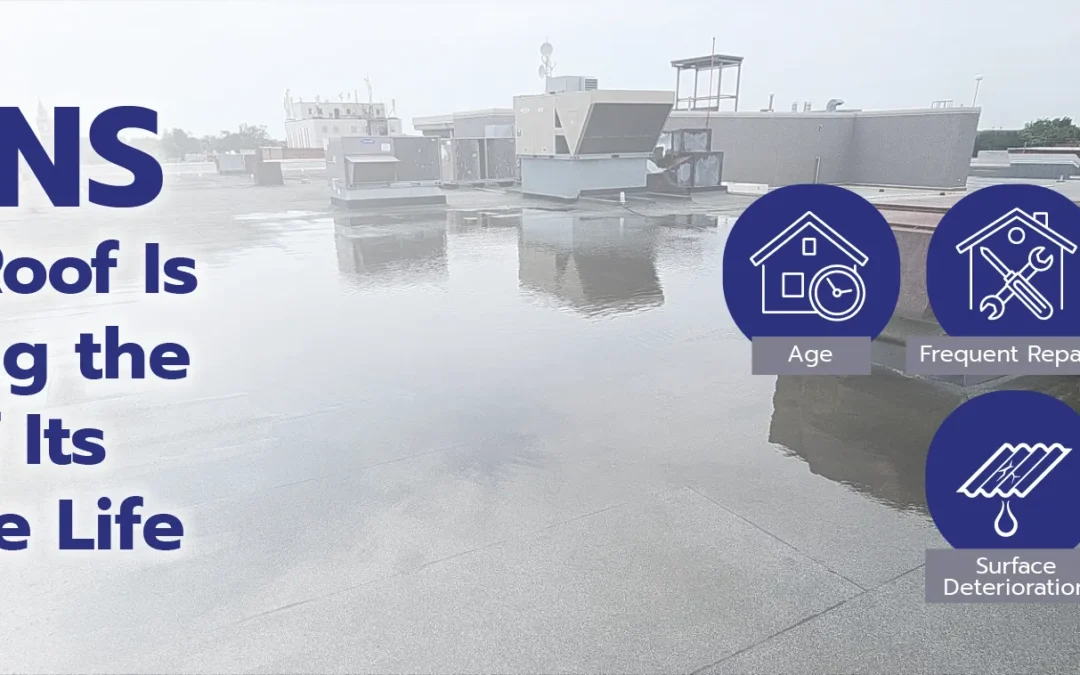
When water is unable to effectively drain, it can be collected in low areas of the roof and remain there for extended periods. As a roof ages, changes to the roofing system or drainage conditions may contribute to areas of standing or ponding water.
Building owners should watch for:
- Water consistently collecting in the same areas
- Drains that frequently become blocked
- Increasing areas of standing water after rainfall
- Debris buildup that prevents proper draining
- Ponding water that remains on the roof long after a rain event
- Signs of staining, algae growth, or debris accumulation around low spots
In some cases, drainage issues can be corrected through maintenance or repairs. However, persistent or increasing drainage issues should be investigated to determine their cause and whether they are related to the overall condition of the roofing system.
If left unaddressed, recurring drainage problems can contribute to accelerated roof deterioration and may indicate underlying issues that extend beyond routine maintenance needs.
Repairs No Longer Provide Long-Term Value
As a commercial roof gets older, ongoing maintenance and repairs may become more common. While repairing these issues can extend the service life of a roof, there may come a point when continually investing in repairs is no longer the most practical long-term approach.
The goal is not simply to keep a roof functioning today but to determine whether ongoing repairs are helping preserve the roof’s long-term performance.
Building owners should consider factors such as:
- How much is being spent on repairs each year
- How frequently new problems are occurring
- Whether previous repairs are continuing to perform
- The overall condition and age of the existing roof
- Remaining expected service life
- Repair costs are increasing year after year
- Multiple roofing components are beginning to show signs of deterioration at the same time
A lower repair cost does not always result in the lowest long-term cost. The goal is not necessarily to replace a roof at the first sign of trouble. Instead, evaluating repair costs alongside the condition and remaining service life of the roof can help building owners determine which approach provides the best long-term value.
When the frequency, scope, and cost of repairs continue to increase, it may be beneficial to evaluate whether a roof recovery or replacement could provide a more predictable and cost-effective long-term solution.
What Should You Do If Your Roof Shows These Signs?
Identifying one or more of these signs does not necessarily mean your commercial roof needs to be replaced. However, when several issues begin occurring together or become more frequent over time, it may be time to evaluate the overall condition of the roofing system.
A professional roof inspection can help determine the extent of any deterioration, identify problem areas, and provide a better understanding of the roof’s remaining service life. Depending on its condition, there are generally three paths to consider:
- Repair: Targeted repairs may be appropriate when issues are isolated, and most of the roofing system is still performing as intended.
- Recover: In suitable conditions, installing a new roof over an existing roofing system can provide an alternative to complete removal and replacement.
- Replace: When deterioration is widespread or the existing roofing system has reached the end of its useful service life, a complete roof replacement may provide the best long-term solution.
Not sure which approach makes sense for your building?
Check out our blog: Repair, Recover, or Replace? How to choose the right roofing strategy.
Signs Can Vary by Roofing System
While many signs of roof aging are universal, different roofing systems can experience deterioration in different ways. Understanding what to look for can help building owners identify potential issues earlier and better assess the overall condition of their roof.
PVC Roofing
- Brittle or cracked membrane
- Membrane shrinkage or tightening
- Blisters or bubbling
- Seam separation
- Ballooning or tightening at flashings
- Deteriorated sealants
- Persistent ponding water
- Recurring or hidden leaks
- Advanced service age
- Repair fatigue
TPO Roofing
- Seam separation and gaping
- Membrane shrinkage or tightening
- Surface chalking and cracking
- Punctures and tears
- Chronic ponding water
- Excessive Patching
- Interior leaks and moisture
EPDM Roofing
- Membrane shrinkage
- Tenting
- Loss of elasticity
- Surface chalking and colour fading
- Exposed scrim
- Edge curl
- Seam separation
- Cracked flashing
- Ponding water
- Bubbles and wrinkles
- Multiple patches
- Interior leaks
Modified Bitumen
- Granule loss
- Surface cracking and alligator cracking
- Blistering or bubbling
- Seams and flashing separation
- Ponding water
- Water stains and drips
- Musty odors and high humidity
- Deck softness or sagging
Built-Up Roof
- Alligatoring
- Blistering or bubbling
- Splits and cracks
- Gravel ballast loss
- Open laps and seams
- Ponding water
- Flashing and parapet separation
- Ceiling stains and leaks
- Musty odors
- Frequent patching
Metal Roof
- Rust and corrosion
- Fading, chalking or peeling paint
- Falling or backing out fasteners
- Loose, warped, or dented panels
- Persistent leaks or water stains
- Deteriorated flashing and sealants
Plan For the Future of Your Commercial Roof
A roof does not need to fail before you begin thinking about what comes next. Recognizing its changes in condition, performance, and repair needs can help you better understand when your roof may be approaching the end of its service life.
Regular inspections and proactive maintenance can help identify potential problems early and give building owners more time to evaluate their options. Whether the right approach is continued repair, roof recovery, or a complete replacement will ultimately depend on the condition of the existing roofing system.
If your commercial roofing system is beginning to show signs of age, contact Goliath Roofing Systems to learn more about your roofing options and how a PVC roofing system can support reliable, long-term performance.