





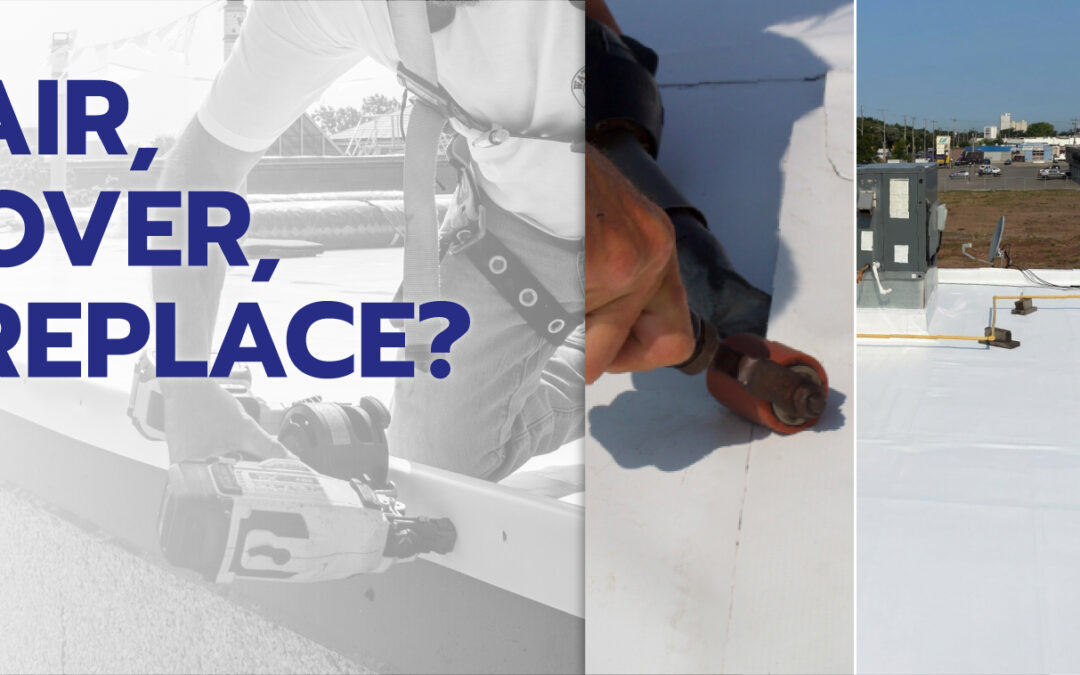
When issues arise on a commercial or industrial roofing system, one of the first questions building owners ask is if the roof should be repaired, recovered or completely replaced.
The answer is not always clear. Roof conditions, age, maintenance history, moisture intrusion, and long-term building goals can all influence the best course of action.
In some cases, a repair may be enough to restore performance and extend the roof service life. In other cases, a roof recovery system may provide an opportunity to upgrade the roof without a complete tear off. However, when deterioration becomes widespread or the roof is at the end of its service life, replacement might be the most practical long-term solution.
Understanding the limitations and advantages or each option can help building owners make more informed decisions on selecting the roofing strategy that aligns with their budget and performance expectations.
What Is Roof Repair?
Roof repair is the process of addressing issues within an existing roofing system while maintaining most of the roof assembly. Repairs are typically performed when a roof is experiencing issues but still has remaining service life.
Common reasons for roof repairs include:
- Membrane damage
- Minor leaks
- Seam issues
- Flashing deficiencies
- Damage from weather, rooftop traffic, or service work
When addressed early, roof repairs can help restore performance and prevent minor issues from developing into much larger ones.
When roof repairs may be the right choice:
- Leaks are limited to a small specific area
- The roofing system is otherwise in good condition
- Damage is isolated and accessible for repair
- The roof has significant service life remaining
- Repairs can address the issue without affecting the overall roofing system
While repairs can restore performance and extend roof service life, recurring issues and increasing maintenance needs may indicate that recovery or replacement should also be considered part of a long-term roofing strategy.
What Is Roof Recovery?
A roof recovery system is the process of installing a new roofing system over an existing roof assembly rather than completely removing or replacing it. When conditions allow, recovery can provide a practical alternative to a full tear-off while restoring weather protection and extending a roofs service life.
Recovery is often considered when a roofing system is showing signs of age or deterioration, but the underlying assembly remains suitable for continued service. Rather than removing the existing roof, a new roofing membrane is installed over the current system, creating a new layer of protection.
When roof recovery may be the right choice:
- The existing roofing system is nearing the end of its service life
- Repairs are becoming more frequent or costly
- The roof assembly is suitable for recovery
- Building owners want to minimize disruption during construction
- A complete tear-off is not necessary
Before moving forward with a recovery project, the existing roof should be properly evaluated. Factors such as roof condition, moisture intrusion, structural considerations, and building code requirements will help determine whether recovery is an appropriate option.
For many low-slope roofing systems, recovery can provide a practical middle ground between ongoing repairs and a complete roof replacement.
Learn more about recovering existing roofing systems with PVC in our guide: Recovering Existing Roofing Systems with PVC.
What Is Roof Replacement?
A roof replacement involves removing the existing roofing system and installing a completely new roof assembly. Replacement is typically considered when a roofing system has reached the end of its service life or when the existing roof is no longer suitable for repair or recovery.
Unlike repairs, which address isolated issues, or recovery systems, which build upon an existing roof assembly, replacement provides an opportunity to start with a new roofing system designed to meet the building’s current performance requirements.
When roof replacement may be the right choice:
- The roofing system has reached the end of its service life
- Recurring leaks and repairs are becoming increasingly common
- Significant moisture infiltration exists within the roof assembly
- The roof is not a suitable candidate for recovery
- Structural concerns or building code requirements necessitate a new assembly
- Long-term building plans warrant a complete roofing system upgrade
While replacement often represents the largest initial investment, it can provide building owners with a completely renewed roofing assembly and the opportunity to address underlying issues that may not be resolved through repairs or recovery.
For roofs experiencing widespread deterioration or significant moisture intrusion, replacement may offer the most practical solution for long-term roofing performance.
Comparing Repair, Recovery, and Replacement
Option |
Best For |
Key Benefit |
| Repair | Localized issues | Lower short-term cost |
| Recovery | Aging but recoverable roofs | Restores performance without full tear-off |
| Replacement | Severely deteriorated roofs | Completely new roofing assembly |
Cost vs Long-Term Value Considerations
When evaluating roofing options, focusing solely on the lowest immediate cost does not always provide the clearest picture of long-term value. Repair, recovery, and replacement each carry different cost considerations that should be evaluated in the context of the building’s long-term value goals.
While repairs may offer the lowest short-term investment, increasing repair frequency can impact long-term ownership costs. Recovery can provide an opportunity to restore roof performance while avoiding a complete tear-off, while replacement may be the best appropriate solution when a roofing system has reached the end of its service life.
When selecting a roofing strategy, building owners should consider:
- Current roof condition
- Expected remaining service life
- Maintenance requirements
- Project budget
- Long-term building plans
When a commercial or industrial roofing system begins experiencing issues, depending on the condition of the roof, repair, recovery, or replacement may each provide a practical path forward.
The most effective roofing strategy depends on several different factors, including roof condition, moisture intrusion, maintenance history, budget, and long-term building objectives. Understanding the advantages and limitations of each option can help building owners make more informed decisions and avoid unnecessary roofing expenses.
A professional roof evaluation is often the best place to start. By properly assessing the existing roof assembly, building owners can determine whether repair, recovery, or replacement is the most appropriate solution for restoring performance and protecting their roofing investment.