





In single-ply roofing systems, seams are a critical point of a roofs performance. While roofing membranes are manufactured to provide waterproofing protection, it is the quality of the seams that ultimately connect individual sheets into a continuous roofing system.
Some roofing systems rely on adhesives or tapes to join membrane sheets. Hot air welded roofing systems use controlled heat and pressure to fuse the membranes together, creating strong seam strength.
Creating a high-quality heat-welded seam requires equipment calibration, proper welding techniques, and ongoing quality control throughout the entire installation process. Every step is designed to help ensure consistent performance and waterproofing.
Understanding how hot air welding systems are installed, tested, and verified can help building owners understand why they are a trusted method for industrial and roofing applications.
What is a Hot Air Welded Roofing System?
A hot air welded roofing system is a method to join roofing membranes by applying heat and pressure at seams. As membrane surfaces are heated, the material softens and fuses together, creating a continuous bond throughout overlapping sheets.
Unlike systems which use adhesives or tapes, hot air welds create a seamless connection that joins the membranes through a fusion process.
This method is used in PVC single-ply roofing systems, where maintaining a consistent watertight seam is critical to the roofing systems’ performance.
The welding system might seem straightforward, but achieving a high-quality weld requires proper equipment setup, membrane preparation, and quality control throughout the whole installation process.
Quality Starts Before the Weld
Before installation begins, contractors take several steps to ensure the conditions are right to produce a high-quality weld.
Common pre-welding procedures include:
- Inspecting the welding equipment.
- Verify a stable power source to maintain consistent welding temperatures.
- Ensuring clean and dry membrane surfaces.
- Perform test welds to confirm equipment settings.
- Adjust welding settings based on membrane type, thickness, and jobsite conditions.
By taking the time to inspect equipment, prepare the membrane, and confirm welding settings, contractors can ensure seam quality before a weld is even conducted. The focus on preparation is a key factor in contributing to strong, consistent, and reliable hot air welded roofing systems.
The Roles of Hand-Held and Robotic Welding
Hot air welding can be conducted using either hand-held or robotic welding equipment, although each method serves a specific purpose during the installation process.
Hand-Held Hot Air Welding
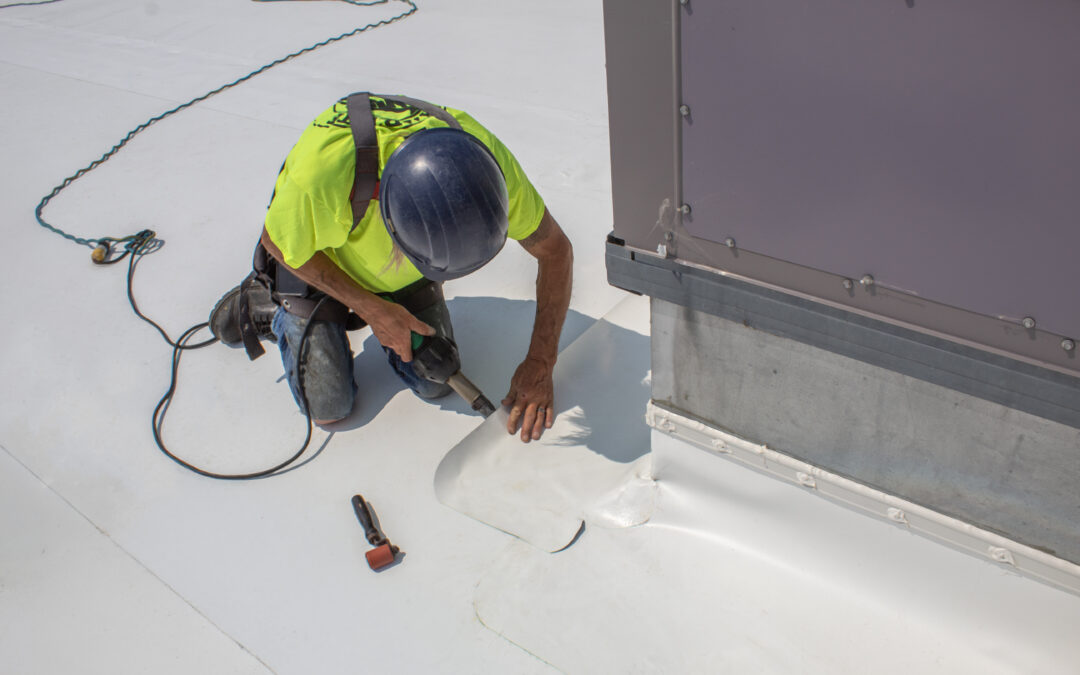
Hand-held welders are used when flexibility and precision are required. Roofing contractors often use hand welding’s when working around:
- Flashing
- Roof penetrations
- Repair areas
- Corners
- Detail work
These areas often contain complex shapes and changes in direction; hand-held welding provides greater control and maneuverability.
Robotic Hot Air Welding
For long field seams, robotic welders are preferred as they provide better consistency throughout the welding process.
Benefits of robotic hot air welding include:
- Consistent welding speed and pressure
- Reduced installer variability
- Consistent seam quality across long roof runs
- Repeatable welding performance across multiple seams
By combining controlled heat, speed, and pressure, a robotic welder helps produce consistent welds across larger areas of the roof.
Together, the hand-held and robotic welding methods allow contractors to create consistent seam performance across large areas of the roof and small roofing details.
Every Weld Can Be Tested
A key advantage of hot air welded roofing systems is that seam quality can be verified throughout the entire installation process. Rather than just relying on a visual inspection, contractors can use physical testing methods to ensure proper welds.
Two common seam verification methods include:
Seam Probing
- Identifies voids or inconsistencies along the seam
- Allows for any deficiencies to be repaired before project completion
Peel Test
- Confirms seam strength and weld quality
- Ensures welding setting are producing consistent welds
- Verifies the membrane has been properly fused together
These procedures provide contractors with greater confidence that seams have been properly installed and are performing as intended.
Strong Seam Performance and Long-Term Reliability
In any single-ply roofing system, seams are one of the most critical components of overall roof performance. Due to roofing membranes being installed in multiple sheets, the strength of the seams is important to maintain a watertight roofing system.
Benefits of heat-welded seams include:
- Creates a consistent watertight seal between membrane sheets
- Reduces the risk of water infiltration at seam locations
- Provides reliable performance in areas exposed to ponding water and heavy rainfall
- Maintains seam strength through changing weather conditions and environmental exposure
- Reduces the likelihood of seam separation and related maintenance concerns
This performance is especially important in PVC roofing membranes, which are known for providing some of the strongest heat-welded seam performance across all single-ply roofing membranes. Heat-welded PVC roofing systems help support long-term roof reliability in demanding commercial and industrial environments.
Hot air welded roofing systems offer more than a method of joining roofing membranes. The entire welding process is designed to produce consistent and reliable seam performance throughout the roof installation.
By combining proper preparation, controlled welding techniques, and seam testing procedures, contractors can verify weld quality rather than relying on a visual inspection. This adds a level of assurance and helps support the overall performance of the roof.
The durable, watertight connection created from heat-welded seams helps reduce any potential weak spots across the roof. This is especially beneficial in PVC roofing systems, where strong seam performance plays a significant role in supporting long-term waterproofing and roof reliability.
For building owners, understanding how hot air welded seams are created, tested, and verified, provides valuable insight into one of the most important components of a high-performing roofing system.