





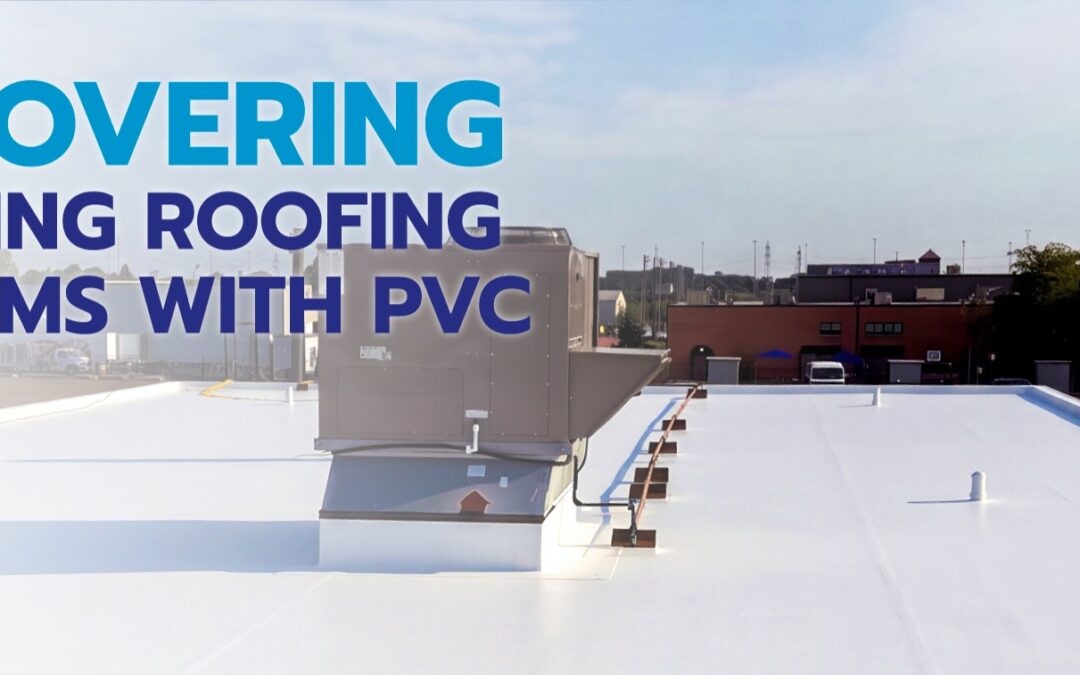
Replacing a commercial or industrial roof can be a large investment, involving additional costs, disruptions to building operations, and the removal of large amounts of roofing material. Although, in some cases, a complete roof replacement may not be the only option.
As roofing systems age, building owners are often faced with recurring leaks, ponding water, and ongoing repair costs. While repairs can help extend the life of a roofing system, there comes a point where maintenance may no longer provide the long-term performance a building requires.
Roof recovery systems provide an alternative approach by installing a new roofing membrane over an existing roof assembly. When conditions allow, roof recovery can help restore waterproofing performance, reduce project disruption, and avoid the cost associated with a complete tear-off.
Among the available recovery options, PVC roofing membranes have become a popular choice as they can provide reliable protection over a wide range of roofing assemblies.
What Is a Roof Recovery System?
A roof recovery system is the process of installing a new roofing system over an existing roofing assembly rather than completely removing and replacing it. Recovery can provide a practical alternative to a full tear off while restoring weather protection and extending the life of the roof.
For many building owners, roof recovery is considered when an existing roof is showing signs of deterioration, but the underlying system remains suitable for continued service.
Potential Benefits of Roof Recovery:
- Helps avoid the cost associated with a compete tear-off
- Extends a roof service life
- Reduces the amount of roofing material sent to landfills
- Minimizes disruption to building operations during installation
- Provides an opportunity to upgrade roofing performance without a full replacement
The Importance of a Roof Assessment
Before moving forward with a roof recovery system, it is important to understand the condition of the existing roof assembly.
An infrared roof scan is often recommended as part of the evaluation process because it can help identify areas where moisture may be trapped within the roofing system. Moisture trapped beneath the roof surface can impact roof performance and affect whether recovery is an appropriate option.
If wet insulation or saturated roofing components are identified during the assessment, those areas should be replaced before the recovery system is installed. Roof recovery is designed to be installed over a sound roof assembly, making proper evaluation an important part of the process.
As every roofing project is unique, factors such as roof condition, moisture levels, structural considerations, and building code requirements should always be evaluated before a recovery system is installed.
Recovering Existing Roofing Systems with PVC
Many aging roofing systems may be good candidates for a PVC roof recovery system, provided the roof assembly is properly evaluated and meets the requirements for recovery.
Depending on the condition of the existing roof, recovery may be considered over:
- BUR (Built-Up Roofing) systems
- Modified bitumen roofing systems
- EPDM roofing systems
- TPO roofing systems
- Metal roofing systems
Rather than removing the existing roofing system, PVC can be installed over a recoverable roof assembly to create a new waterproofing layer and restore long-term performance.
By choosing this approach, building owners can address aging roof conditions while upgrading to a modern single-ply roofing system designed to restore waterproofing performance.
Benefits of Recovering with PVC
When an existing roof is suitable for a recovering system, the choice of roofing membrane can have a significant impact on long-term performance.
Heat-Welded Seams
- Seams are heat-welded to create a strong bond
- Welding fuses the membranes together, helping form a durable seal
- Reduces reliance on adhesives and sealants at seam locations
Lightweight Roofing Membrane
- PVC is one of the lightest roofing membranes available for commercial low-slope roofing applications
- Helps minimize additional weight added during recovery projects
- Can help preserve available structural capacity for snow and environmental loading
Water and Ponding Water Resistance
- Designed to provide long-term waterproofing performance
- Helps maintain a continuous protective barrier over the roof assembly
Fire Resistance
- PVC membranes are self-extinguishing
- Goliath PVC membranes have a Class A fire rating when installed
- Can help support building fire performance requirements
Chemical Resistance
- Resistance to many chemicals, oils, and greases found in commercial and industrial environments
- Suitable for buildings exposed to rooftop exhaust or industrial containments
By combining strong seam performance, reliable waterproofing, and resistance to environmental exposure, PVC roofing membranes provide a durable solution for roof recovery applications.
Explore the full range of Goliath PVC Benefits.
Why Goliath PVC Recovery Systems
Built on over 50 years of PVC roofing manufacturing experience, Goliath Roofing Systems delivers the reliability and performance expected from a modern roofing membrane.
Every recovery project is unique, which is why Goliath PVC can be incorporated into a variety of recovery assemblies designed to meet project-specific requirements.
PVC membrane thickness options:
- 50 mil
- 60 mil
- 80 mil
The appropriate membrane thickness is selected based on factors such as roof conditions, expected rooftop traffic, environmental exposure, and overall performance objectives.
In many recovery applications, a separation layer is needed between the existing roof and the new PVC roofing membrane.
1” Polyiso Insulation
- Provides additional thermal performance
- Creates a smooth substrate for membrane installation
FR-10 Fire Resistant Slip Sheet
- Lightweight design suitable for many recovery applications
- Helps improve fire performance in approved assemblies
- Coated glass-fiber designed for installation over wood decks and certain combustible insulation materials
- Commonly used as a fire-retardant slip sheet in commercial roofing systems
Goliath PVC recovery systems can be installed using several attachment methods depending on project requirements.
Options include:
- Mechanically fastened
- Induction welded
- Fully adhered
This allows roofing professionals to install recovery systems that align with building requirements, rooftop conditions, wind uplift considerations, and long-term roofing objectives.
When used as part of a properly designed roof recovery system, Goliath PVC can help restore weather protection, improve roofing performance, and extend the service life of an existing roofing system.
For many aging roofing systems, recovery can provide a practical way to restore waterproofing performance without removing the existing roof assembly. When conditions allow, PVC roofing membranes offer a combination of heat-welded seams, waterproofing performance, fire performance, and environmental resistance that make them well-suited for roof recovery applications.
A successful project begins with a thorough roof assessment as proper evaluation helps ensure the existing roof assembly is suitable for long-term performance.
Whether recovering over BUR, modified bitumen, EPDM, TPO, or metal roofing systems, PVC recovery systems can provide a durable solution for extending roof service life and restoring roof performance.
By combining proper assessment, thoughtful system design, and high-performance roofing materials, building owners can maximize the value of an existing roofing asset while avoiding the disruption and expense associated with a complete roof replacement.