





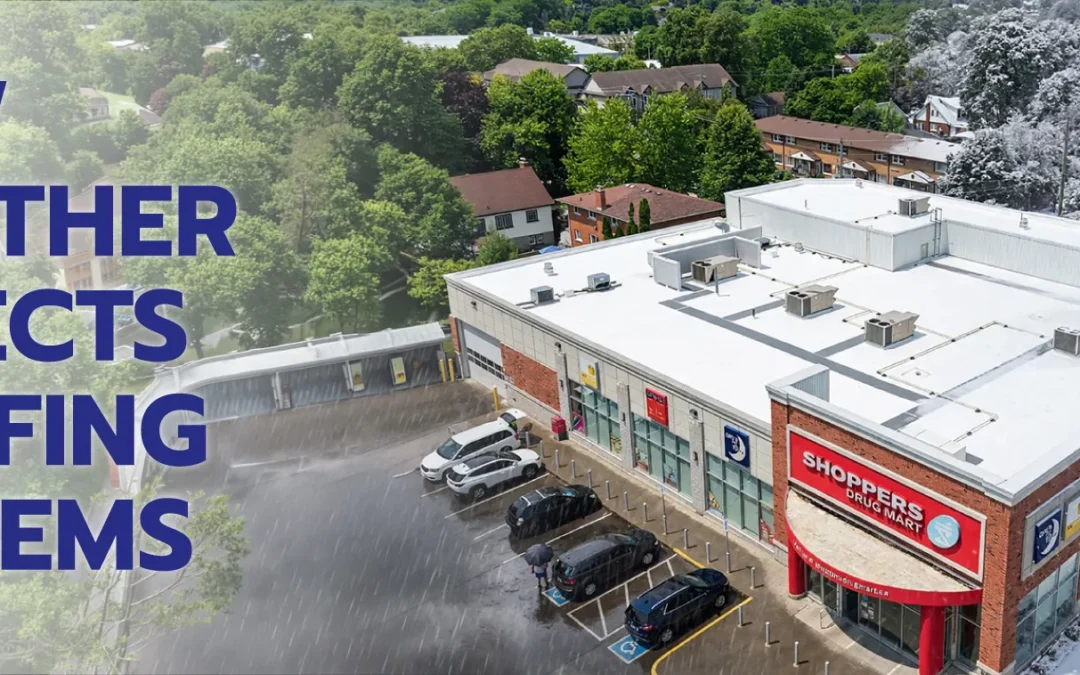
Commercial roofing systems are exposed to changing weather conditions throughout the year. From summer heat and long-term UV exposure to rain, snow, ice, wind, and freezing temperatures, a roofing membrane needs to provide reliable protection through a wide range of environmental conditions.
These weather conditions do more than simply affect the roof’s surface. Over time, temperature fluctuations, moisture, sunlight, and severe weather can cause stress on roofing materials, impacting their long-term durability, waterproofing performance, and overall reliability.
For building owners and facility managers, choosing a roofing system that can withstand these changing conditions is an important part of protecting the building and supporting long-term roof performance.
PVC roofing is well suited for demanding weather conditions because of its flexibility, waterproofing performance, UV resistance, and durability. Goliath PVC combines a polyester-reinforced membrane with a weather-resistant top ply and acrylic finish designed to support long-term performance in commercial and industrial roofing applications. These characteristics help the membrane perform through changing temperatures, moisture, sunlight, and other environmental conditions.
Understanding how weather affects commercial roofing systems, and how different roofing materials are designed to respond to them, can help building owners make more informed decisions about roof selection. In the sections below, we will explore some of the most common weather-related challenges commercial roofs face throughout the year and how PVC roofing membranes are designed to address them.
Cold Temperatures and Freeze-Thaw Cycles
Commercial roofing systems can experience significant temperature changes throughout the year, particularly in colder climates. As temperatures rise and fall, roofing materials need to remain flexible and stable while continuing to provide reliable protection for the building.
When temperatures change, roofing materials expand and contract, which can create stress at seams, details, and roof penetrations. Repeated freeze thaw cycles can accelerate wear over time, particularly if moisture is within or beneath the roofing system.
Roofing materials that become brittle in colder temperatures may be at risk to cracking, splitting, or other forms of damage, making flexibility an important consideration in areas which experience harsh winter conditions.
The Goliath PVC single-ply roofing membrane is designed to perform through seasonal challenges, providing the flexibility and stability needed to withstand changing temperatures and cold-weather conditions.
Rain, Ice, Snow, and Moisture
Rain, snow, and ice expose commercial roofing systems to moisture year-round. For low-slope roofs, maintaining a watertight roofing system is essential to protecting the building and supporting long-term performance.
Moisture is one of the most significant factors affecting commercial roof performance. Rainfall, melting snow, ice, and seasonal storms can all expose a roofing system to moisture. If water were to penetrate the roofing assembly, it could contribute to interior leaking.
On low-slope commercial roofs, water management is essential as drainage may occur more slowly than on steeper roof designs. As a result, the roofing membrane and its seam play a critical role in maintaining a watertight building envelope.
Goliath PVC uses heat-welded seams that create a strong, watertight bond between membrane sheets. Unlike seams that rely on adhesives or tape, thermoplastic PVC membranes can be welded together to create a continuous roofing surface. Combined with the membrane’s waterproofing properties, these heat-welded seams help provide reliable protection against rain, snow, ice, and moisture exposure, supporting durable performance in a wide range of weather conditions.
UV Exposure and Summer Heat
Commercial roofs are exposed to direct sunlight and UV radiation throughout their service life. During warmer months, prolonged sun exposure can increase rooftop temperatures, placing additional demands on the roofing membrane.
Over time, UV radiation can contribute to the aging of roofing materials and place additional stress on the roofing system, impacting its durability.
Goliath PVC is designed for long-term UV and weather exposure. Its highly reflective surface helps reduce the amount of solar heat absorbed by the membrane. By reflecting more of the sun’s energy, the PVC roofing membrane helps limit heat at the roof surface, supporting the membrane’s durability and long-term performance through hot and sunny conditions.
Wind and Severe Weather
Commercial roofs can also be exposed to strong winds and severe weather throughout the year. These conditions can place additional stress on the roofing system, particularly around the roof’s edges, corners, seams, and flashing details where wind pressures are often greatest.
Strong winds are often accompanied by rain and rapid changing weather conditions, placing additional demands on commercial roofing systems. As a result, proper roof design and installation are important for maintaining reliable weather protection in the long term.
To address these challenges, Goliath PVC roofing systems are available in certified wind uplift assemblies, providing options for projects with specific wind requirements. The membranes anti-wicking polyester reinforcement provides additional strength and tear resistance, supporting durable performance through demanding weather conditions.
Ponding Water
Ponding water can occur on low-slope commercial roofs when water remains on the roof surface for an extended period. This can result from drainage issues, low areas on the roof, or changing conditions that prevent water draining as quickly as intended.
When water remains on a roof for prolonged periods, it can place additional stress on roofing materials and roof details. Over time, persistent moisture exposure may increase the likelihood of leaks if vulnerabilities exist in the roofing system. For this reason, ponding water is an important consideration when evaluating the long-term durability and waterproofing capabilities of a commercial roof.
Goliath PVC is built to withstand long-term exposure to ponding water. Its anti-wicking polyester reinforcement provides enhanced moisture resistance, while heat-welded seams create a strong, watertight bond between membrane sheets. Together, these features help support reliable waterproofing performance during prolonged exposure to ponding water.
Built for Changing Weather
Weather conditions can change significantly throughout the year, and a commercial roofing system needs to be prepared to perform throughout each season. From freezing thaw cycles and exposure to UV radiation, strong winds, and ponding water, each weather condition can impact the long-term durability and reliability of a roof.
Understanding how weather affects commercial roofing systems can help building owners and facility managers make more informed decisions when evaluating roofing materials and planning for long-term building protection.
Goliath PVC is designed with these challenges in mind, combining flexibility, weather resistance, and reliable waterproofing performance in a single-ply roofing system.
Choosing a roofing membrane built to perform through changing weather conditions can help building owners protect their roofing investment and support reliable performance for years to come.