





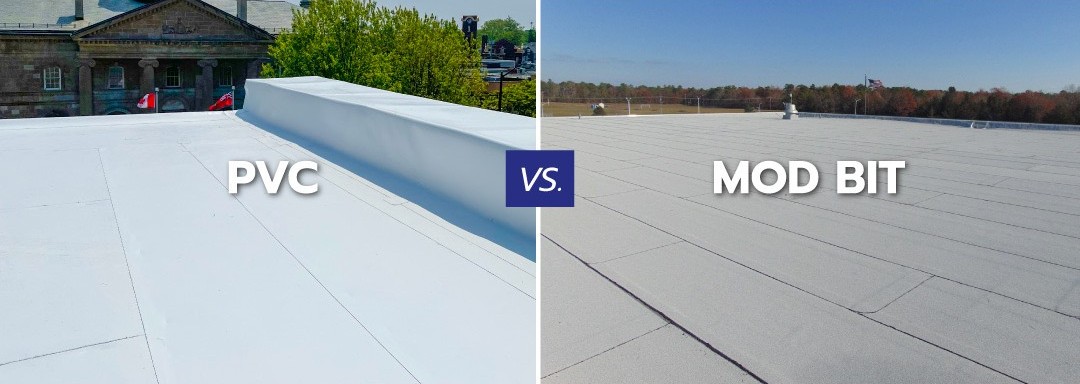
PVC and modified bitumen roofing systems are widely used as roof membrane solutions for flat roofs, both providing strong waterproofing for industrial and commercial applications. Even though they are both designed to have a similar purpose, they differ in how they are built, installed, and perform over time.
Even though both are effective membrane roofing systems for flat roofs, their differences in seam method, maintenance needs, lifespan, and material composition have an impact on long-term performance and total cost.
By understanding how these systems compare, it allows building owners to choose a flat roof membrane system that aligns with their building needs, usage, and long-term performance goals.
What are PVC and Modified Bitumen Low Slope Membrane Systems?
Modified Bitumen Roofing
- Asphalt based roofing system reinforced with polymers such as SBS or APP.
- Installed in a multi-layer membrane system for added durability.
- Seams are sealed using heat, adhesives, or self-adhered methods.
- Commonly used for low-slope applications and smaller roof areas.
PVC (Polyvinyl Chloride)
- Single ply roofing membrane made from ethylene and chlorine.
- Suggested for buildings exposed to chemicals, grease, oils, and heat.
- Heat-welded seams to create a permanent watertight bond.
- Used in commercial and industrial flat roofing applications.
Installation and Seam Differences
One of the biggest differences between PVC and modified bitumen roofing systems is how they are installed and how their seams are created. These factors play a major role in long-term performance, reliability, and risk.
Modified Bitumen Roofing Systems
- Seams are created overlapping and sealing the material.
- Installed using torch down (open flame), cold adhesives, self-adhesives (peel-and-stick).
- Torch down applications present a fire risk during installation.
- Installation can produce strong odors and VOCs, which can impact occupants.
PVC Roofing Systems
- Seams are heat-welded, creating a strong, permanent bond.
- Welding fuses the membrane together, forming a watertight seal.
- Installation does not rely on open flames.
- Provides a controlled installation process.
Durability and Performance
When comparing PVC and modified bitumen roofing systems, durability and long-term performance are very important factors to consider. Both systems are designed to protect flat roofs, but they do so in different ways.
Modified Bitumen Roofing Systems
- Multi-layer installation provides added redundancy against leaks.
- Thick material provides resistance to tears and punctures.
- Reliability can vary based on installation and seam quality.
PVC Roofing Systems
- Single-ply membrane with heat-welded seams for consistent performance.
- Provides reliable resistance to water intrusion.
- Performs well in environments exposed to chemicals, grease, and heat.
- Scrim provides tear and puncture resistance.
Maintenance Requirements
Maintenance is an important factor when comparing flat roof membrane systems as it affects the long-term performance of a roof as well as overall cost.
Modified Bitumen Roofing Systems
- May require more consistent maintenance to prevent leaks around seams or penetrations.
- Seams and overlaps require regular inspection to ensure performance.
- Repairs are typically easy and straightforward.
- Performance can vary depending on installation quality and long-term exposure to elements.
PVC Roofing Systems
- Heat-welded seams provide a strong connection across the roof.
- Performance tends to remain consistent when properly installed.
- Well maintained systems can support long-term performance.
Learn how to maintain a PVC roof for maximum lifespan.
Lifespan Comparison
The expected lifespan of a flat roof membrane system is an important factor as it impacts long-term value and overall costs, especially when considering maintenance and replacement timelines.
Modified Bitumen Roofing Systems
- Typically lasts 15-20 years.
- Lifespan can vary based on installation quality, environmental exposure, and ongoing maintenance.
- Provides durability, but performance may decline over time.
PVC Roofing Systems
- Can last up to 30 years depending on use.
- Heat-welded seams provide consistent long-term performance.
- Designed to maintain durability across many different commercial and industrial applications.
- Performance usually remains stable with proper installation and maintenance.
Cost comparison: Initial vs Life Cycle
When comparing flat roof membrane systems, it’s important to look beyond the initial cost and consider the full life cycle cost of the roof system. Modified bitumen roofing systems are often viewed as a cost-effective option, but their labour intensive installation and shorter lifespan can impact long-term cost. PVC roofing membranes are higher in initial costs but designed for longer service life and consistent performance which keep long-term costs lower. Over time, these factors have a large impact on the long-term value of the roofing system.
PVC and modified bitumen roofing systems serve as reliable flat roof membrane solutions, but they differ significantly through installation, performance, and what they deliver over time.
Modified bitumen offers a multi-layer system with strong resistance to wear. PVC roofing, however, provides a more modern approach with heat-welded seams, consistent installation, and long-term performance across a wide range of commercial and industrial roofing environments.
When comparing these systems, certain factors such as seam method, maintenance needs, durability, and life cycle, play a critical role in overall performance. While both systems can meet the needs of a flat roof, their differences have a big impact on how the roof performs throughout its lifecycle.
By understanding these key differences, building owners can make strong decisions which align with their building requirements, long-term goals, and performance expectations.