





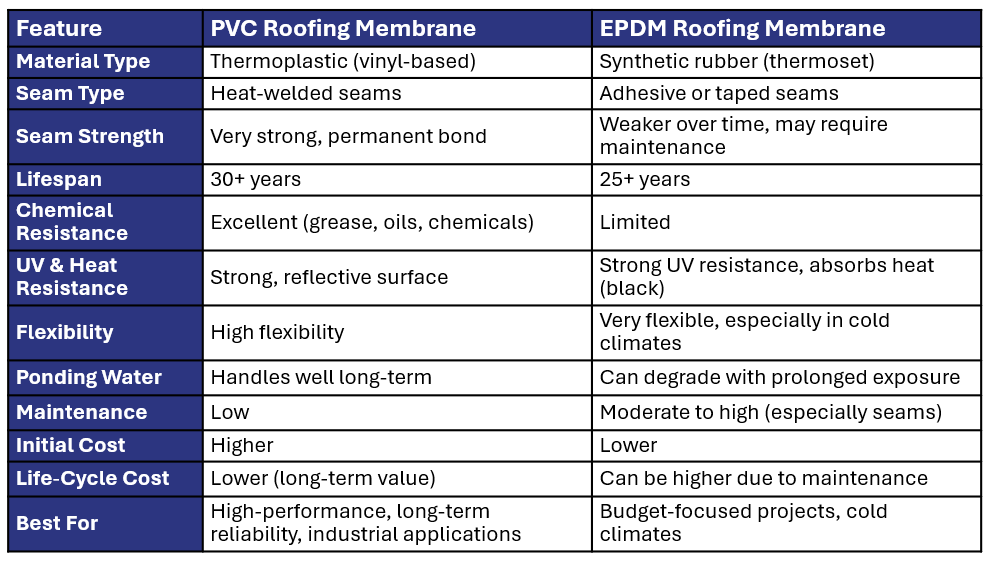
PVC and EPDM are two common single ply roofing membranes in the industrial roofing industry, yet they both are designed for different performance standards. When choosing a roofing system for your project, it is important to understand the differences between PVC and EPDM roofing to ensure the best long-term durability, performance, and costs.
Key points to consider
- Seam technology and long-term leak resistance.
- Initial costs vs life cycle costs.
- Maintenance requirements and long-term reliability.
- Performance in extreme temperatures and UV resistance.
What are PVC and EPDM roofing membranes?
PVC (Polyvinyl Chloride)
- Single ply roofing membrane made from ethylene and chlorine.
- Suggested for buildings exposed to chemicals, grease, oils, and heat.
- Heat-welded seams to create a permanent watertight bond.
EPDM (Ethylene Propylene Diene Monomer)
- Single ply roofing membrane made from ethylene, propylene, and diene.
- Often selected for budget-driven applications.
- Seams rely on adhesives or tapes.
Goliath PVC Key Benefits
- Lifespan 30+ years.
- Reflectivity helps keep membrane cooler to make it last longer.
- Fully Recyclable.
- Built to withstand long exposure to ponding water without deterioration.
- Excellent flexibility across all climates and maintains performance in changing environmental conditions.
- Inherently fire resistant.
- Anti-wicking polyester reinforcement provides strength and tear resistance.
- Industry leading top-ply thickness and acrylic top finish enhances weather resistance and durability.
- Carbon reduction strategies are supported through high reflectivity and reduced cooling demand.
- With long lifespan and low maintenance cost, PVC has the lowest life cycle cost in the industry.
Check out all the Benefits to PVC roofing membrane.
EPDM Key Benefits
- Cost effective roofing solution with the lowest install cost across all single-ply roofing systems.
- Highly resistant to UV, ozone, hail, and extreme temperature fluctuations.
- Remains flexible in extreme cold conditions.
- Installed in large rolls making need for less seams, resulting in less seam leak potential.
- Inexpensive to repair, keeping short-term repair costs low.
Why Choose Goliath PVC?
- Heat-welded seams create a permanent, monolithic bond, significantly reducing the risks of seal failure compared to adhesive or taped seals.
- Strong resistance to oils, grease, and fats, making PVC a strong suggestion for commercial kitchens.
- Naturally fire-retardant as it is self-extinguishing, enhancing building safety.
- PVC’s highly reflective white surface keeps membrane cool, rather than EPDM’s typical black surface.
- Despite the higher upfront costs of PVC, it is cheaper than EPDM in the long run due to its much longer life cycle and typically less maintenance.
- Excellent performance in high heat environments.
At Goliath we pride ourselves on the superior quality of our PVC and the expertise of our experience Goliath team. Our materials are designed, engineered, and well researched to perform and exceed your expectations and requirements.