





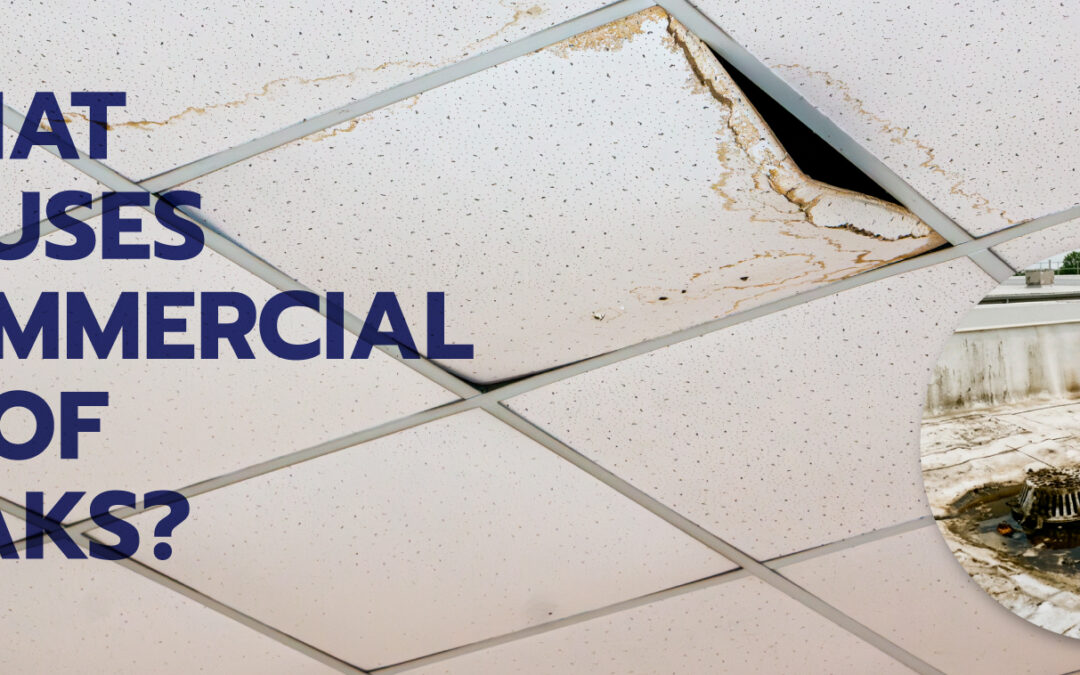
Roof leaks are one of the most common issues affecting commercial and industrial low-slope roofing systems. Whether a building utilizes a single-ply roofing system, modified bitumen roof, or BUR assembly, water infiltration can lead to building damage, operational disruptions, and costly repairs if left unaddressed.
One of the challenges with roof leaks is that the source of the leak is not always located directly below where water enters the building. Water can travel through an entire roofing assembly before it becomes noticed inside, making leak detection difficult for many building owners.
While no roofing system is completely immune to leaks, many water intrusion issues can be traced back to a handful of common causes. Understanding these causes can help building owners identify potential problems earlier, take proactive maintenance measures, and make more informed roofing decisions.
Roofing Membrane Damage
The roofing membrane serves as the primary waterproofing layer of a roofing system. In a single-ply roofing system, the membrane is designed to create a continuous barrier that helps protect the building from water intrusion. When that membrane becomes damaged, leaks can occur.
Roofing membrane damage can result from a variety of factors, including:
- Severe weather events
- Dropped tools or construction debris
- Excessive rooftop traffic
- Punctures from equipment or sharp objects
Even small punctures can allow water to enter the roofing assembly. In many cases, the damage may go unnoticed until leaks begin to appear inside the building.
While all roofing systems can experience membrane damage, the membrane design and installation method can play an important role in long-term leak resistance.
Flashing and Roof Detail Failures
While large roof areas often receive the most attention, many commercial roof leaks originate at roof details rather than in the field of the roofing membrane itself.
Flashing is used to seal and protect areas where the roofing system meets rooftop accessories or changes in elevation.
Common locations for flashing include:
- Pipe penetrations
- Roof curbs
- Drains
- Wall transitions
- Vents
Due to these areas involving multiple roofing components working together, they can be among the most vulnerable locations for water intrusion when damage or deterioration occurs.
In a single-ply roofing system, properly installed flashing details play a critical role in maintaining a continuous waterproofing assembly. Over time, weather exposure, rooftop traffic, building movement, and aging materials can all contribute to flashing-related issues.
Routine roof inspections can help identify damaged or deteriorated flashing before water has an opportunity to enter the roofing system and impact building operations.
Seam Issues
In a single-ply roofing system, seams play a critical role in maintaining a watertight roof assembly. Roofing membranes are installed in multiple sheets, meaning the seams connecting those sheets must perform as a continuous waterproofing barrier across the roof surface.
Over time, seam-related issues can develop due to:
- Improper installation
- Physical damage
- Excessive rooftop traffic
- Environmental exposure
- Movement within the roofing system
Proper seam performance is essential in a single-ply roofing system, as compromised seams can create opportunities for water to enter the roofing assembly.
This is one reason why many building owners choose PVC single-ply roofing systems. PVC membranes use heat-welded seams, which fuse membrane sheets together to create a durable, watertight connection.
While properly installed seams are designed for long-term performance, routine roof inspections can help identify potential issues before they lead to water infiltration and interior building damage.
Learn more about the benefits of heat-welded seams in our blog: Benefits of Hot Air Welded Roofing Systems.
Ponding Water and Drainage Problems
Proper drainage plays an important role in the long-term performance of any low-slope roofing system. When water is unable to drain properly from the roof surface, it can accumulate and create areas of standing water commonly referred to as ponding water.
Ponding water can occur for several reasons, including:
- Blocked drains or scuppers
- Debris accumulation
- Improper roof slope
- Drainage design deficiencies
While many roofing systems are designed to withstand short-term exposure to water, prolonged ponding can place additional stress on roofing components and raise the likelihood of future roofing issues.
In a single-ply roofing system, ponding water can make it more difficult to identify membrane damage, seam deficiencies, and other conditions that may allow water to enter the roofing assembly. It can also contribute to the accumulation of dirt, debris, and organic growth that can affect roof performance if left unaddressed.
To help prevent ponding water-related issues, building owners should:
- Keep drains and scuppers clear of debris
- Conduct routine roof inspections
- Address drainage concerns promptly
- Remove debris build up before it restricts water flow
Routine maintenance and proper drainage management are some of the most effective ways to reduce the risk of ponding water and help maintain the long-term performance of a roofing system.
Lack of Routine Maintenance
Even the most durable single-ply roofing systems require routine inspections and maintenance to perform as intended over time. When maintenance is overlooked, small roofing issues can gradually develop into larger problems that increase the likelihood of leaks.
Many roof leaks begin as a minor issue that goes unnoticed until water enters the building. Routine inspections help identify these conditions early, allowing repairs to be completed before they impact overall roof performance.
A proactive maintenance program can help support proper drainage, identify potential leak sources early, extend roof service life, reduce unexpected repair costs, and maintain the roofs overall performance.
For building owners, regular roof maintenance is one of the most effective ways to reduce the risk of leaks and maximize the long-term performance of a roofing system.
Want to learn how proper maintenance can help maximize roof lifespan? Read our guide: How to Maintain a PVC Roof For Maximum Lifespan.
When Should Building Owners Act?
Many leaks begin as small issues that can be addressed before they develop into larger roofing problems. The longer a roofing issue is left unaddressed, the greater the potential for damage to the roofing system, insulation, and building interior.
Building owners should consider scheduling a professional roof inspection if they notice:
- Recurring leaks
- Ponding water that remains on the roof for extended periods
- Increasing repair frequency
- Visible membrane damage
- Deteriorated flashing details
- Signs of water intrusion inside the building
Addressing issues early can often reduce repair costs and help preserve the long-term performance of the roofing system.
Commercial roof leaks often occur without warning. Whether the cause is membrane damage, flashing deficiencies, seam issues, ponding water, or deferred maintenance, many roofing problems develop gradually over time.
By understanding common causes of leaks, building owners can take a more proactive approach to roof management. Regular inspections, routine maintenance, and prompt attention to minor issues can help reduce the likelihood of water intrusion and extend the service life of a roofing system.
For owners of single-ply roofing systems, maintaining membrane integrity, seam performance, and proper drainage are especially important components of long-term roof performance. By identifying issues early and working with qualified roofing professionals, building owners can help protect their roofing investment and avoid more extensive repairs in the future.